Why calculate a specific carbon footprint for a product?
To effectively reduce emissions, you first need to know exactly where your climate impact occurs. While a general CO₂ footprint provides an overview at organisational level, a Product Carbon Footprint (PCF) focuses on a single product during its life cycle and offers much deeper insight.
A PCF maps the entire life cycle of a product and calculates CO₂ emissions at every stage. This shows exactly which materials, processes or phases have the greatest impact, helping you identify emission hotspots and determine where the most effective improvement opportunities lie. This forms a solid basis for setting priorities and selecting meaningful reduction measures.
In addition, a PCF helps substantiate sustainability claims towards customers and stakeholders. This is becoming increasingly important in legislation, such as under the Empowering Consumers for the Green Transition Directive. With a PCF, you can demonstrate that your claims are accurate and that you approach sustainability in a credible and transparent way.
Get startedThis is how we do it – your own action plan in three steps
1. Product and system definition
First, we’ll discuss the goal of the PCF: do you want to assess the impact of a reduction measure, compare products, or provide evidence to support your communications? With the goal in mind we’ll map out the product’s life cycle: from raw material extraction to the end of its useful life. We collect this information in a process map that we draw up together with experts to identify the data requirements. In this way, we ensure that everything is clearly mapped out so that we know exactly which data we need for the calculation.
2. Data collection and calculation
Based on the process map, we then set to work and collect the necessary data. We guarantee the quality of the data to ensure an accurate final result. Once the results have been calculated, we draw up an inventory report, clearly showing the emissions for each life cycle stage. In addition, we develop a reporting guide so that you can follow all the insights and get started with the PCF yourself.
3. Acting on the results
We present the results to the project team and discuss the emission hotspots. Together, we explore the reduction potential of various measures and formulate initial, achievable steps towards emission reduction. We can also support you in determining the best way to communicate these results in line with regulations such as the Empowering Consumers for the Green Transition (ECGT) directive. Where desired, we plan follow-up steps such as a progress report, a reduction strategy or a subsequent round of calculations. In this way, we ensure that the results are immediately translated into action!
Frequently Asked Questions
Climate neutral means that an organisation compensates for its own emissions so that the net emissions are zero; even if actual emissions have not been significantly reduced. Offsetting through for example forestry projects plays a major role here.
Net Zero goes further. It requires organisations to structurally reduce almost all emissions across their entire value chain, and to offset only the small share of residual emissions that cannot be eliminated. Net Zero therefore focuses on genuine emission reduction rather than primarily relying on offsetting. This is where true impact happens!
A CO₂ reduction plan and an SBTi pathway are closely connected: both describe how an organisation aims to reduce its emissions based on clear, measurable targets.
The key difference is that SBTi targets are externally assessed and validated according to scientific criteria.
At 2BHonest, we ensure that reduction plans align with SBTi guidelines, so they can be submitted for validation if desired.
A carbon footprint provides insight into how many emissions an organisation currently generates and where those emissions come from. It makes the present situation transparent and measurable.
A CO₂ reduction plan builds on this by setting reduction targets and identifying the measures needed to structurally reduce those emissions over time.
Get started with your own team
We firmly believe in teamwork. We customise our strategic long-term projects, according to the needs of your company or organisation. We form a dedicated team of three to six experts, diverse and resilient in nature. They work together to guide your organisation from the development stage to the implementation stage. This way, we safeguard quality and guarantee the continuity of your sustainability initiatives. Want to make an impact together?
A preview of our experts
Meet two of our experts who, together with a dedicated team of fellow experts, contribute to the long-term success of our clients.

Romeo Kaptijn
Has the ability to translate detailed insights into strategic actions.
Link to Romeo

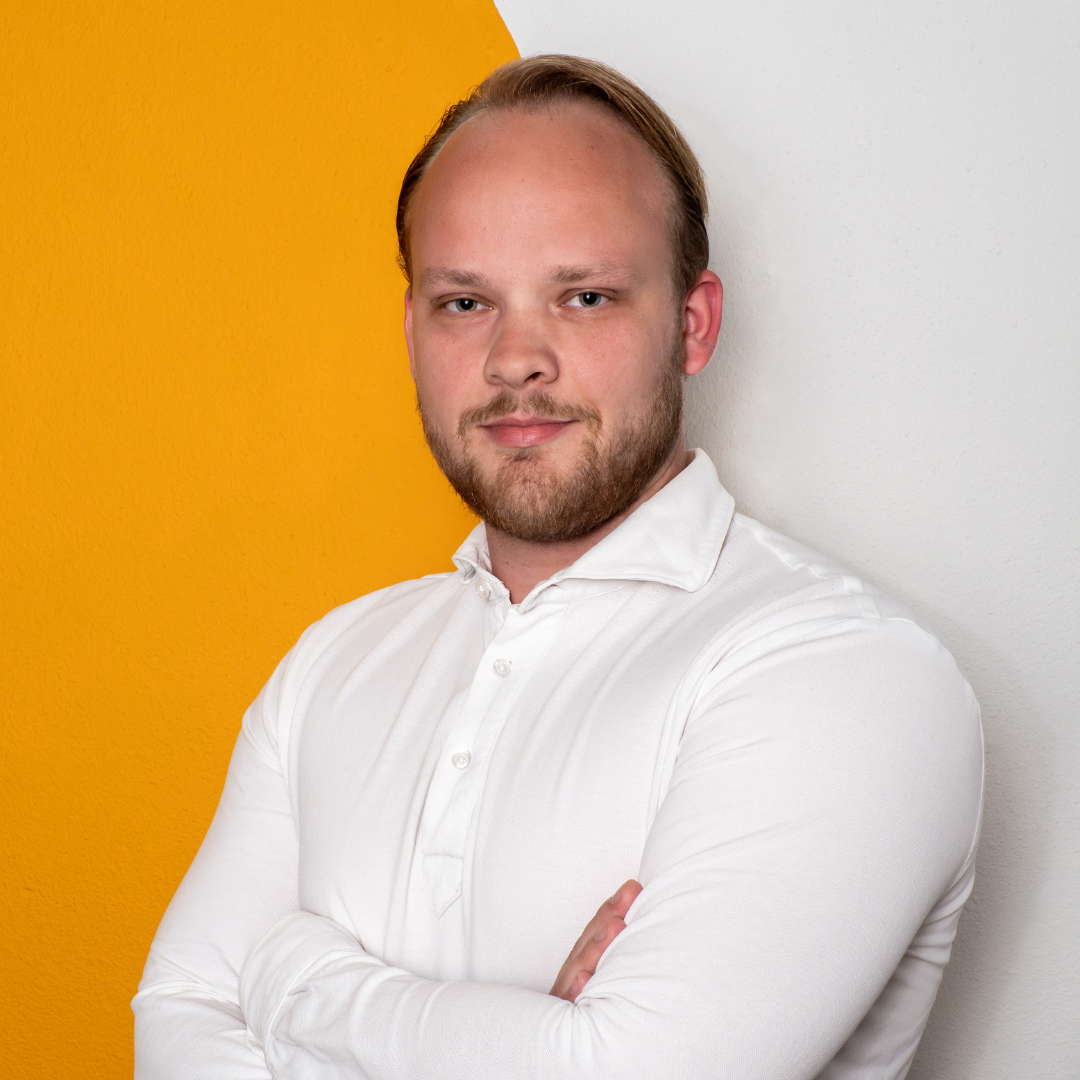
Maarten Andriessen
Great enthusiasm in helping our clients achieve their sustainability ambitions.
Link to Maarten