



Winne Benschop
Senior Consultant
My focus is on building support among employees and guiding organizations toward a sustainable future that is both ambitious and achievable.
Societal attention to sustainability is evolving. Political support is shifting, legislation is being revised, and public discourse is changing. But the challenges remain just as urgent. Climate change, resource scarcity, and social inequality will not disappear just because the wind is blowing in a different direction for a while.
In this context, the role of companies is also changing. They are no longer merely followers of policy, but pioneers of a future-proof economy. Any company that wants to continue growing strategically must embed sustainability at the core of its organization. And that can only be achieved if employees feel a sense of ownership over the issue.
Table of contents
Still, fostering a sense of ownership is easier said than done. While some employees are fully open to the idea, others feel less engaged and find it difficult to actively get involved. For both groups, it can be challenging to make sustainability part of their daily work: change can feel like a big step, may require extra effort, and sometimes brings uncertainty. The key, therefore, lies in defining sustainability in concrete terms for each role and providing practical tools to help employees contribute. Only when people understand what it means for them personally does the space for engagement and action emerge.
An inspiring example of this is Royal Swinkels. They chose to become a leader in one area: circularity. Not as a standalone project, but as an integral part of their daily work. Together with 2BHonest, they developed the Swinkels Circularity Index (SCI), a method that links circularity to concrete goals and processes: from procurement to production and reuse.
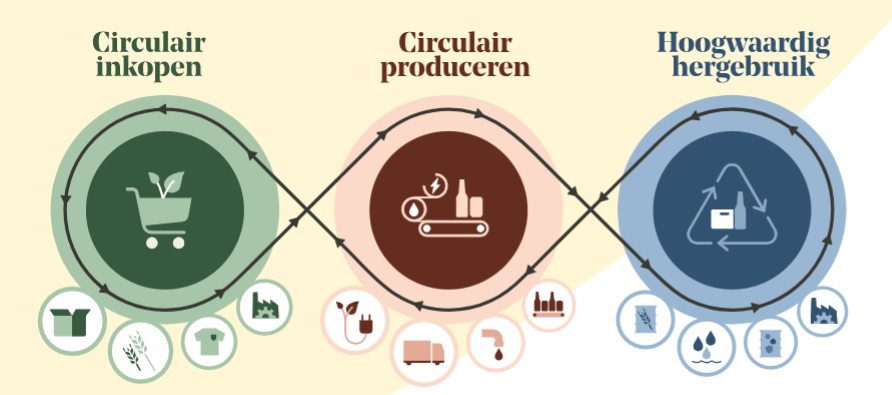
What makes this approach unique is how employees are involved. For each role, it has been clearly defined what circularity means. Progress is made measurable and open to discussion through the SCI. Employees receive training and are given the freedom to implement it in their own way. This creates a combination of clear guidelines and room for customization. Everyone knows what it’s all about and how they can contribute to the bigger picture.
This approach shows that when you make sustainability actionable, momentum builds. Not by focusing on abstract goals or resorting to jargon, but by talking to people in plain language, engaging them, training them, and showing them that their contribution matters. In this way, sustainability becomes not just another task, but a shared responsibility that leads to real progress.
Winne Benschop