

Winne Benschop
Senior Consultant
My focus is on building support among employees and guiding organizations toward a sustainable future that is both ambitious and achievable.
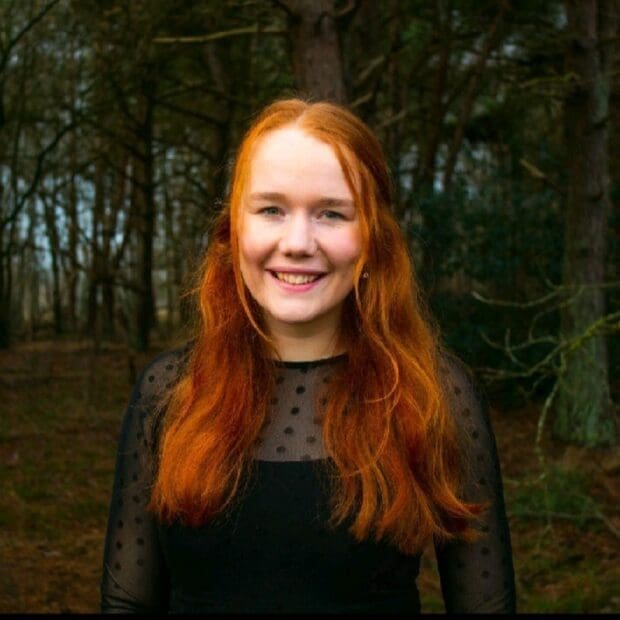
Anke ter Huurne is a sustainability coordinator in SPIE’s high-voltage unit. She is participating in a two-year traineeship during which she will take on four different roles. In her current position, she focuses on sustainability within projects. She has noticed that for clients such as TenneT, sustainability is playing an increasingly important role in tenders and projects. At the same time, SPIE itself is actively taking steps in this area.
“We’re getting more and more questions about sustainability from customers,” Anke says. “That called for more focused attention within the organization, which is why this position was created.”
SPIE has established its own sustainability goals and aims to implement them in a more concrete way. As part of her role, Anke visits projects to learn what is already being done in the area of sustainability and where opportunities exist to take further steps. In doing so, she draws on both the client’s needs and the organization’s own ambitions.
Anke participated in the KIEM program to further broaden her perspective on sustainability. Although topics such as CO₂ reduction and circular practices had already been covered during her studies and work, the program provided her with additional insights.
“Sustainability is much broader than just CO₂,” she says. “Among other things, you have to deal with the SDGs and a wide range of concepts.”
She was particularly drawn to the section on engagement in * KIEM *. “I found the question of how to get people on board and keep them engaged very interesting.” Change management was largely new to her, but it aligns well with her role as a sustainability coordinator. She also finds working with different types of people and learning how best to approach them to be practical and relatable.
“I was already pretty familiar with the technical side, but I hadn’t had much experience with how to engage people and get them on board.”
Anke can immediately apply the knowledge she’s gained in her work. The concepts and regulations surrounding sustainability are useful in practice, but she’s especially taking away the tools for engaging in conversation with her colleagues. “How do you approach people, and how do you make it interesting for them? I’m definitely going to build on that.”
In addition to the content, the opportunity to exchange ideas with other participants was also valuable to Anke. “You get to talk to people from both the same and completely different industries. It’s interesting to see that you often run into the same issues.”
She emphasizes that sustainability is a field in which there is a great deal of knowledge sharing. “You’re not competitors. People are eager to exchange ideas and learn from one another.” She views the network that emerged during the KIEM Program as a key outcome, and she intends to stay in touch with its members even after the program ends.
Anke recommends the KIEM Program, especially for those new to the field of sustainability. The program helps broaden your perspective, offers practical tools for everyday work, and provides a valuable network both within and outside your own sector.
“If you’re unsure, I think you’ll find it helpful anyway.”
Would you like to join the KIEM program — just like Anke — to increase your sustainability potential?
There are still a few spots available for the program, which begins in October.
Winne Benschop