


Lydia Boonstra
Senior Consultant
I believe that fair and sustainable supply chains are the future.
As a trade association, you have the opportunity to accelerate progress in your sector by connecting companies and pooling knowledge. Yet we see that this role often goes untapped. We keep hearing the same questions from companies within a sector: How do we deal with new legislation? Where do we start with sustainability? How are other companies tackling this? These are exactly the kinds of questions where trade associations can make a real difference — especially now that the EU Omnibus Directive is shifting regulations and companies are seeking clarity. So it’s high time for a reality check with a senior consultant Lydia Boonstra: why would an industry association wait any longer?

Now is the time for trade associations to take action. In fact, in times of geopolitical turmoil and a shifting EU course, this is more necessary than ever. Companies are seeking clarity, and industry associations can play a key role in providing it. By supporting your members, sharing knowledge, and fostering collaboration, you help them take the right steps in a changing policy landscape. And by building bridges between businesses and the government on sustainability, you provide direction and momentum within the sector.
Of course, companies have their own responsibilities, but why go it alone when we can make faster progress together? Consider sustainability reporting (such as for CSRD) and ESG data collection: companies all need to collect data, report, and engage their stakeholders — for example, to conduct the dual materiality analysis — and often these involve the same supply chain partners, such as suppliers. Why not tackle this collectively as an industry? That saves time, money, and energy — for both the companies that need the information and the parties that have to provide it.
But in addition to being cost-effective, collaboration also makes strategic sense: it ensures a consistent message to auditors regarding the interpretation of certain issues, it creates a level playing field, and it strengthens companies’ position in the market.
The Omnibus and the Clean Industrial Deal (CID) make it clear that the EU is stepping up its efforts to make concepts such as circularity measurable. Collecting data therefore remains crucial, even for companies that fall outside the scope of the new CSRD.
Well, aside from a few standout examples, there’s still a lot to be gained. Many trade associations are still figuring things out. They call us or their own members with questions like, “Should we do something about this?” The answer is simple: yes, you should. Not only because your members are counting on you to do so, but also because, as a trade association, you have the power to make an impact on a sector-wide scale and accelerate the transition.
By actively engaging with sustainability and legislation, you’ll gain insight into where your industry stands. You can establish benchmarks, identify challenges, and share successes. This offers a tremendous opportunity to position your industry as a leader.
In addition, as a trade association, you also play a key role in advocating for your members’ interests with the government in the area of sustainability . You can ensure that legislation better aligns with real-world practices, prevent unrealistic requirements, and create opportunities for financial support, such as grants or tax incentives. This benefits your members, as well as policymakers and the market.
As a member of a trade association, you can expect it to take action on the issues that matter — and sustainability is definitely one of them. That means your trade association:
Of course, there are more issues at play within a trade association than just sustainability, such as innovation and market development. But sustainability and related legislation must not be pushed to the bottom of the priority list. These are the key issues of our time, with a direct impact on businesses.
We understand that this isn’t always easy. Many industry associations don’t have all the necessary expertise in-house and sometimes lack the time and resources to stay on top of all the latest developments. That makes sense: even we, as industry experts, have to constantly keep up with what’s changing, because developments are happening at lightning speed. That’s why it’s valuable for trade associations to collaborate with external consultants or knowledge providers. They help maintain a clear overview, bring up-to-date knowledge to the table, and ensure that insights are properly applied to the sector.
Absolutely. Techniek Nederland They take a broad approach to their role through working groups, knowledge sharing about the CSRD, and the development of sustainability labels. Together with us, they provide their members with concrete guidance and help accelerate progress within the sector. Companies clearly appreciate this.
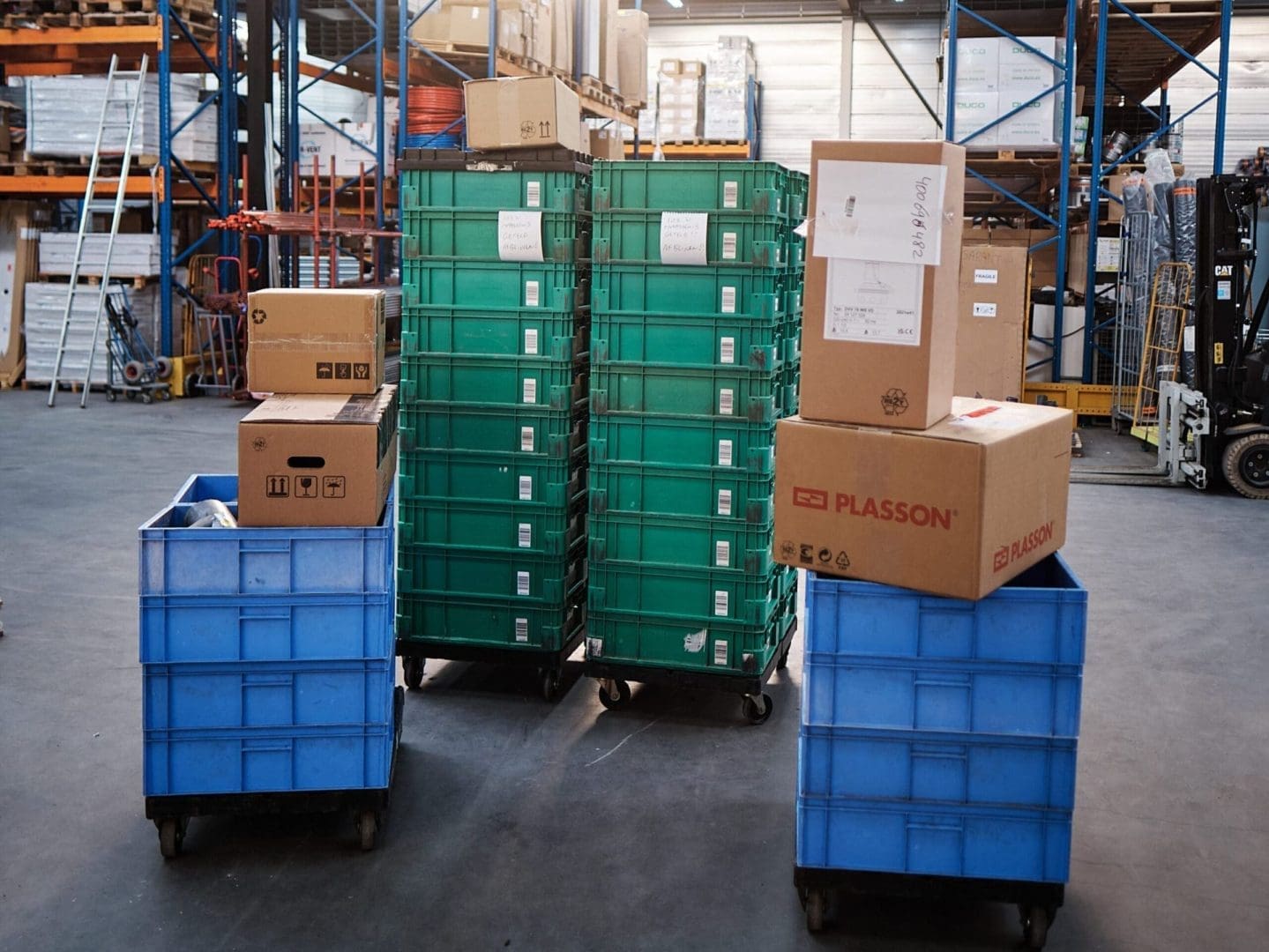
In addition, they also take a theme-specific approach, such as with the Brancheplan Verpakkingen. This plan brought together more than 70 parties to achieve circular economy goals. Techniek Nederland facilitated the collaboration, and we helped develop concrete tools that contributed to reducing packaging and making it more sustainable. It spurred companies into action and accelerated sustainability efforts within the sector.
We are currently working on a second industry-specific plan for Techniek Nederland, for the electrical engineering sector. Other industry associations are also active. At Koninklijke Hibin , we held information sessions on the CSRD, and for NVM, we organized a webinar and developed an information package.
At the same time, we still see a great deal of untapped potential. For example, the food and agriculture sectors are brimming with opportunities to take joint action — such as sharing knowledge about climate risk analyses in the supply chain, EUDR legislation, or collaborating on packaging reduction. And that’s exactly what excites us. We’re eager to get to work with these industries, get things moving, and take concrete steps together toward greater sustainability. It’s a matter of identifying where our members’ needs lie and responding to them.
We bridge the gap between ambition and action. We do this in a variety of ways:
Small and medium-sized enterprises (SMEs), in particular — which often lack the time and resources to tackle sustainability issues on their own — benefit enormously from this. They receive support and expertise that would otherwise be difficult for them to access. Large companies, on the other hand, can play the role of frontrunners: they share their experiences, inspire others, and help the sector as a whole move forward. I always say that sustainability transcends competition. Because when you work together, a powerful network emerges in which companies of all sizes strengthen one another.
Don’t wait any longer. By taking a more active role, you can accelerate the sustainable transition in your sector. So step up, share your knowledge, foster collaboration, and make a difference.
Don’t just sit back and wait. Reach out to your trade association, let them know what you need, and seek out opportunities for collaboration. Together, you’ll get further.
Ready to take on your role as a trade association? Let’s work together to see how we can get your industry moving. Lydia is ready to help!
Lydia Boonstra